
Is cooking in an air fryer healthy? Oil, crispiness and coatings explained
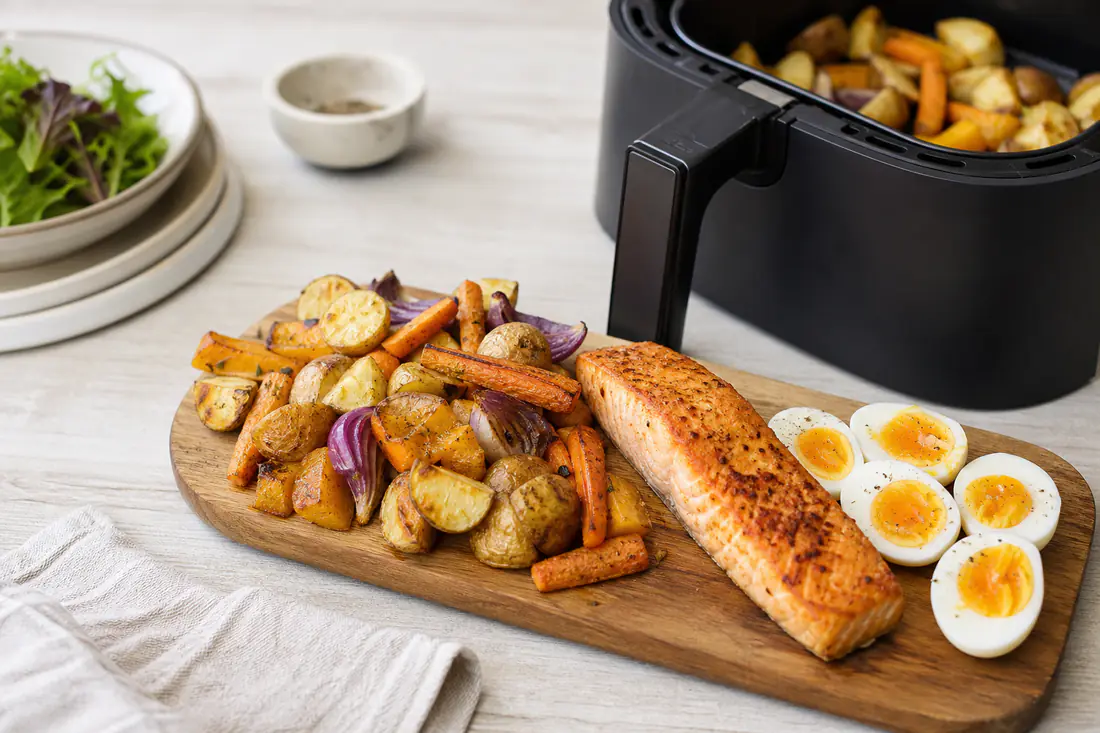
An air fryer is not a health food machine. It is an oven that blows hot air very quickly, and what ends up on the plate depends on what goes into the basket. What it does change is the amount of oil: chips, wings and breaded food can be crisp with a spoonful of oil, where deep frying needs a pan full. That is a difference in method, not a promise about anyone's health. So are air fryers healthy? They can help you cook with less oil, and the sections below look at oil, browning and basket coatings, plus practical questions such as whether you can put foil in an air fryer.
This guide is general consumer information, not medical or dietary advice. It covers oil, how brown to take starchy food, what to know about non-stick coatings, the questions about foil and boiled eggs in air fryer baskets that are searched most often, and how to keep the machine in good condition.
Oil: less than deep frying
Hot air alone cannot fry, so air fried food relies on fat already in the food, such as the fat in sausages and bacon, or on a light brush or spray of oil on the surface. A single tablespoon is usually enough for four portions of homemade chips, and many frozen products need none at all. That is much less than deep frying, where the food sits in oil.
Less oil does not turn a food into a different food. Breaded and battered products, pastry and cheese stay rich however they are cooked. The simplest way to make an air fryer meal lighter is to use it for plainer foods, such as roast vegetables, chicken breast, salmon or broccoli, and to serve them with a fresh side.
Healthy air fryer recipes: what to look for
Searches for healthy air fryer recipes tend to point at the same few ideas, and they are sensible ones:
- Vegetables roasted with a light spray of oil, which come out crisp at the edges.
- Lean cuts of chicken, turkey or fish, cooked until the centre is safe (75 °C for chicken and turkey).
- Sweet potatoes and chickpeas as a snack in place of packet crisps.
- Eggs, which need no oil at all.
Golden, not dark brown
When starchy foods such as potatoes, parsnips and bread are cooked at high temperatures, they can form a chemical called acrylamide, and the darker the food, the more of it there can be. The Food Standards Agency's "Go for Gold" advice is simple: cook starchy foods to a golden yellow colour, not a dark brown. That applies to every cooking method, including the air fryer.
The practical points are easy to follow:
- Stop at golden. Check chips and roast potatoes a few minutes before the end of the time.
- Follow the pack for frozen chips and potato products.
- Do not leave toast, crisps or wedges to blacken at the edges.
Non-stick coatings and non-toxic air fryer options
Most baskets have a non-stick coating. Used as intended, the coating is designed for cooking, but it is worth looking after:
| Do | Avoid |
|---|---|
| Wash gently with a soft cloth or sponge | Metal utensils, abrasive scourers or steel wool |
| Follow the manufacturer's manual | Heating the machine empty for a long time |
| Replace a basket whose coating is flaking or scratched | Carrying on with a damaged coating |
Anyone looking for a non-toxic air fryer has choices. Some models have stainless steel, ceramic or glass baskets or cooking bowls, and these have no non-stick layer to wear away. They can need a little more oil to stop food sticking. Whichever you choose, the manual is the best guide to safe temperatures and cleaning. The cleaning guide explains what to use on each type of surface.
Can you put foil in an air fryer?
Foil is the most searched air fryer question, and the answer is yes in most cases, with limits. Can you put tin foil in an air fryer safely? It can go in as long as the food holds it down, it stays clear of the heating element, and it does not cover the whole base, because air must be able to circulate. Never preheat the machine with loose foil in it, as the fan can lift it towards the element. Avoid acidic food such as tomatoes or lemon against foil, and check the manual, because some manufacturers advise against it. The baking paper and foil guide has the full list.
Boiled eggs in the air fryer
Boiled eggs in the air fryer need no water and no oil. Preheat to 150 °C for 3 minutes, then cook fridge-cold eggs for 10 minutes for soft, 12 minutes for jammy or 15 minutes for hard-boiled, and cool them in iced water. Stay at 150 °C, because higher heat can make eggs burst. The boiled eggs page has the full timings.
Food safety still applies
Using less oil does not change the food safety rules. Chicken, turkey, sausages and minced meat should reach 75 °C in the centre, and frozen food should be cooked as the pack says. Leftovers should be cooled quickly and reheated until steaming hot. The Food Standards Agency's cooking advice covers the details, and the frozen food guide shows how to cook ready-made products.
Questions and answers
Is an air fryer healthier than deep frying?
It uses much less oil, which is the main difference. What you cook still matters more than the machine, so plain vegetables, fish and lean meat suit it best.
Are air fryers toxic?
Used as the manufacturer describes, air fryers are made for cooking. Look after the coating, replace a damaged basket and do not heat the machine empty. Stainless steel, ceramic and glass options avoid non-stick coatings altogether.
Can you put tin foil in an air fryer?
Yes, in small pieces held down by food and kept away from the element. Do not preheat with loose foil or block the airflow completely.
How do you stop air fryer food going too dark?
Cook starchy foods until golden yellow rather than dark brown, follow the pack timings and check a few minutes early.
Do you need to use oil in an air fryer?
Often a light spray is enough, and many frozen foods need none. Fatty foods like sausages and bacon release their own fat.


