How to Use an Air Fryer: A Beginner's Guide to the First Week
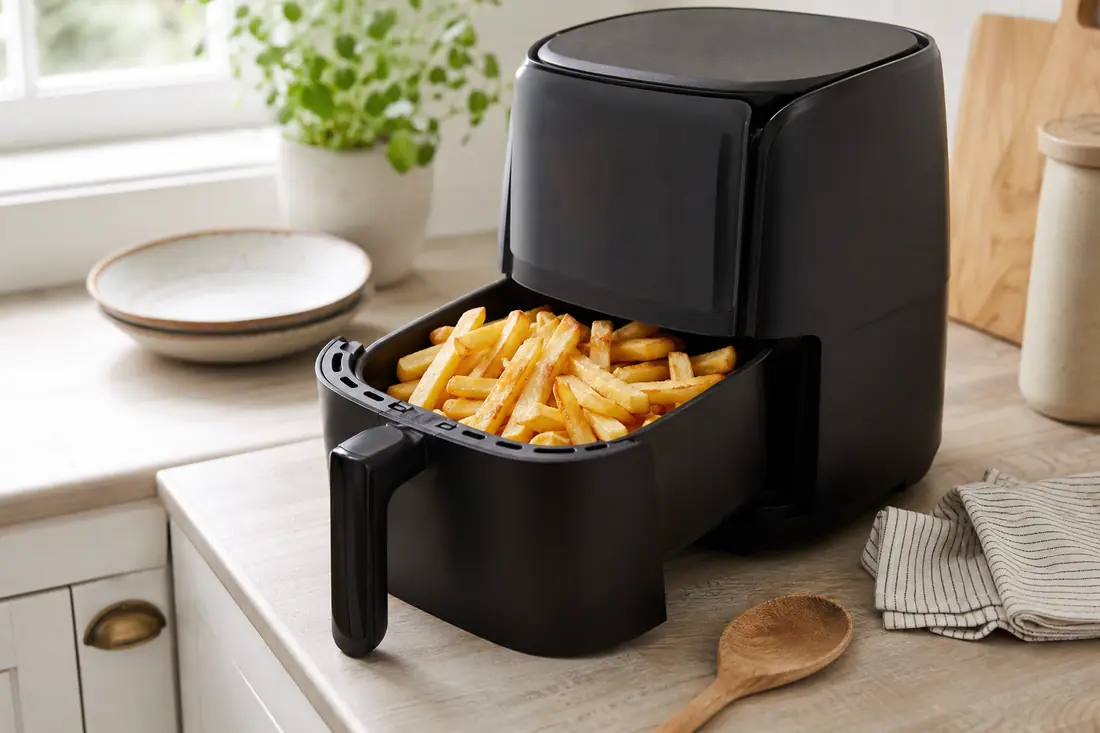
How does an air fryer work, and what do you actually do with it on the first day? It is a compact fan oven. A heating element sits above the basket and a fan pushes hot air around the food at speed, so the outside browns and crisps with far less oil than a deep fat fryer. This guide covers the whole routine in order, from unboxing to cleaning, followed by ten easy recipes to try during the first week.
Most beginners get good results by following four habits: preheat briefly, cook in one layer, shake or turn halfway and check the centre of meat with a thermometer. The rest is detail, and the sections below explain each step.
Before the first cook
Take out all packaging, wipe the basket and drawer with warm soapy water, dry them and run the empty machine at 200 °C for about 10 minutes. Some models give off a faint smell the first time, which fades quickly. Place the appliance on a heatproof worktop with a gap of at least 10 cm behind and above it, because hot air leaves through vents at the back or top. Do not tuck it under a wall cupboard.
How does an air fryer work?
Heat comes from the element, and the fan drives it through the basket. Moving air strips moisture from the surface of food, which is why chips and chicken skin turn crisp. Because the cooking space is small, food cooks faster than in a full-size oven. As a rule of thumb, drop the oven temperature by about 20 °C and shorten the time by a fifth to a quarter, as the oven to air fryer conversion guide explains.
Do you need to preheat an air fryer?
Yes, for most foods. Preheating takes about 3 minutes at the temperature you plan to use, and it gives the first batch the same strong start as the oven. Many machines have a preheat button; if yours does not, set the temperature and run it empty for 3 minutes. Food dropped into a cold basket spends its first minutes steaming rather than browning, which matters most for frozen food, pastry and anything that should be crisp. Delicate bakes and very short jobs such as toast are fine without it.
Preheat the empty basket only. Never put baking paper or foil in loose while it heats, because the fan can lift it into the element.
Loading the basket
- One layer. Air must reach every side of the food. A pile of chips steams in the middle while the top burns.
- Leave space. Keep the food at least 2 cm below the element and do not wedge it against the sides.
- Dry the surface. Pat meat, fish and vegetables with kitchen roll before oil or seasoning goes on.
- Cook in batches rather than overfilling. A second batch often cooks faster because the machine is already hot.
Oil, shaking and turning
You need far less oil than you might think. One teaspoon is enough for a portion of vegetables or potato, brushed or rubbed on. Food that is already fatty, such as sausages and bacon, needs none. Use a brush or pump spray rather than pouring oil into the basket.
Shake small items (chips, sprouts, chicken pieces) halfway, and turn larger pieces with tongs. Pull the basket out as often as you like; the machine pauses and resumes.
Liners, foil and accessories
Perforated paper liners, heat-safe silicone mats and small pieces of baking paper all work if food holds them down and the air holes stay mostly open. The baking paper in the air fryer guide covers foil, silicone and greaseproof paper in detail. Useful extras are tongs, a probe thermometer, a small oven-safe dish that fits with a gap around it, and a silicone brush.
Time and temperature at a glance
| Food | Temperature | Time |
|---|---|---|
| Frozen chips | 200 °C | 15–18 minutes |
| Pork sausages | 180 °C | 12–15 minutes |
| Streaky bacon | 180 °C | 8–10 minutes |
| Salmon fillet, 3 cm | 200 °C | 8–10 minutes |
| Frozen fish fingers | 200 °C | 8–10 minutes |
| Medium jacket potato | 200 °C | 40–45 minutes |
| Cheese toastie | 180 °C | 6–8 minutes |
These are starting points for a 4–6 litre basket. The full list is on the air fryer cooking times page.
Air fryer recipes for beginners: ten to try first
Easy foods with forgiving timings build confidence quickly. Try these in roughly this order:
- Frozen chips, the classic first test of crispness.
- Sausages, which need no oil and teach you to check the centre.
- Bacon, ready in under 10 minutes.
- Fish fingers for a fast lunch.
- Cheese toastie, with a gooey middle in about 7 minutes.
- Garlic bread, golden in 4–6 minutes.
- Chicken nuggets, good practice for checking a safe core temperature.
- Salmon fillet, a quick midweek dinner.
- Roast potatoes once you are comfortable shaking.
- Jacket potatoes, which take longest but need almost no attention.
For packet food, the frozen food in the air fryer guide lists times for popular items.
Safety and cleaning
Poultry, minced meat, sausages and reheated food must be steaming hot all the way through, which means 75 °C in the centre. Pork joints and whole cuts need 70 °C. The Food Standards Agency explains safe temperatures in its cooking your food guidance.
Clean the basket after each use once it has cooled, using warm soapy water and a soft sponge. Wipe the inside of the unit occasionally, and keep the element free of grease. The how to clean an air fryer guide has the full routine.
Questions and answers
How do you use an air fryer for the first time?
Wash and dry the basket, run the empty machine at 200 °C for about 10 minutes, then cook something simple such as frozen chips at 200 °C for 15–18 minutes, shaking halfway.
How long should you preheat an air fryer?
About 3 minutes at the cooking temperature. Larger oven-style models may need 5 minutes. Preheat the basket empty, with no loose paper inside.
Can you use an air fryer to cook from frozen?
Yes, and it is one of the best uses. Most frozen foods go straight into a preheated basket without thawing. Always follow the pack for the safe cooking instruction.
Can you use an air fryer as a microwave?
Not as a replacement, since it cooks from the outside in rather than heating food from within. It can reheat food well, though. Reheat cooked sausage rolls at 160 °C for 4–5 minutes until steaming hot.
Do you need to turn the food?
Usually once, halfway. Small items such as sprouts and chips benefit from a shake, and thick pieces such as chicken breasts or sausages from a turn with tongs.